
Standard ~300 kg • Up to ~2 m lift • Level lifts up to 1500 kg

Electric lifts & leveling lifts: Lifting. Positioning. Transporting.

For material handling, order picking and ergonomic working heights – mobile via battery (electric lifter) or stationary with excellent accessibility (level lift).

Battery & mobile
Flexible without a power outlet – ideal for tight spaces.
ergonomics
Reduced bending/reaching depth thanks to appropriate working height.
Accesories
Platform, hook, pin, fork, swivel/turning unit and much more.

Two solutions – one goal: Move loads safely and ergonomically. Electric lifts, as battery-powered mini-lifts, are particularly maneuverable; leveling lifts bring pallets/containers to a comfortable working height and are easily accessible from three sides.

Typical uses

Laboratory, pharmacy, library, production – anywhere where frequent handling is required.

Scalable performance

Standard devices up to approx. 300 kg / ~2 m; level lifts up to 1500 kg.

Also available in stainless steel

Suitable for hygienic/chemical environments and special requirements.
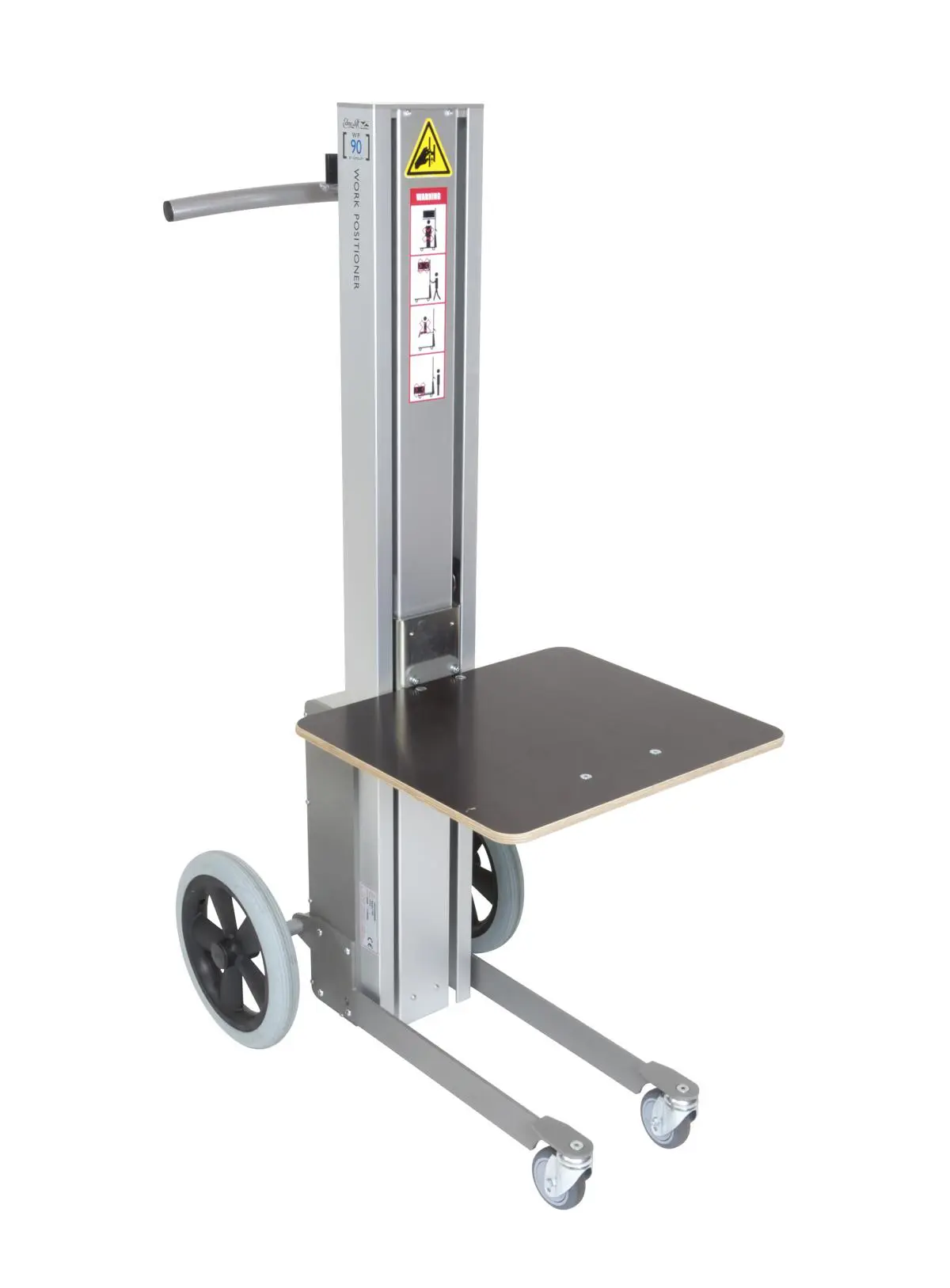
Electric lift (example)

Electric lifter (mobile, battery-operated)

Ideal if you want to lift, move and precisely position boxes, materials or parts at the touch of a button – without a forklift.

  • Flexible: Use without permanent installation.
  • Order picking: Quickly and safely to working height.
Level lift / lifting lift (example)

Level lifts (stationary, very easily accessible)

Pallets or containers are set up using pallet trucks/forklifts and then lifted to an ergonomic working height – with plenty of leg and foot space.

  • 3-sided access: smooth operation of the container.
  • Options: Depending on the model, it may also have a tilt function.
Electric lifter with roller attachment

Special Shots & Accessories

If the standard platform is insufficient, load-bearing components can be precisely adapted to your product: rollers/mandrels, hook arms, guide rollers, prism supports, rotary/turning units, and much more.

  • Perfect fit: Less improvisation, more process reliability.
  • Faster: ergonomic access & clean material flow.
Electric lift in stainless steel (example)

Stainless steel versions

For hygienic and laboratory environments, many variants are also available in stainless steel – as a standard solution or special design upon request.

  • Hygienic: Suitable for sensitive areas.
  • Configurable: Recording/platform as required.

Brief overview: typical key data & selection criteria

To help you quickly choose the right direction: Mobile (electric lift) vs. stationary (level lift) – plus the appropriate load capacity.

  • Electric lifter: Battery-powered mini lift, very maneuverable; standard units up to approx. 300 kg and ~2 m lifting height
  • Level lifts: stationary, very good accessibility; load capacity up to 1500 kg
  • Accessibility: Level lift with leg/foot clearance thanks to lifting technology in the column
  • Load capacities: Platform (standard) + hook, pin, fork, swivel/rotating unit, rotating platform, prism supports, etc.
  • Special version: Stainless steel or custom-designed structures possible

Frequently asked questions about electric lifts (lifts & leveling lifts)

Explained concisely – from areas of application and load capacities to typical performance data.

What exactly is an electric lift or hoist?
An electric lifter is a mobile, battery-powered mini-lift that allows you to lift and move boxes/materials at the touch of a button. Stationary leveling lifts raise pallets/containers to an ergonomic working height.
What are electric lifts typically used for?
Commonly used in laboratories, pharmacies, libraries, as well as in production and storage – e.g. for order picking and material handling in confined spaces.
What are the usual load capacities and lifting heights?
Standard electric lifts typically have a lifting capacity of up to approximately 300 kg and a lifting height of around 2 m; leveling lifts are available with capacities up to 1500 kg, depending on the model. The specific device specifications are always the determining factor for the design.
What is the difference between an electric lift and a level lift?
Electric lifter: mobile, battery-operated, for boxes/parts up to medium loads. Leveling lift: stationary, easily accessible on three sides, ideal for ergonomic pallet/container handling.
Can I lift pallets with an electric hoist?
Only with a suitable attachment (e.g., forklift/special attachment) and within the load capacity. For classic pallet handling processes, a leveling lift is often more practical: Position the pallet using a pallet jack/forklift, then lift it.
Are there stainless steel versions for food/laboratory use?
Yes, many hoists are also available in stainless steel – particularly useful in hygienic and chemical environments or as a special design.
Which load supports are available?
A platform is usually standard. Optional features include hooks, prongs, forks, swivel/rotating units, rotating platforms, or prism supports – depending on the product.
Do I need a forklift licence for an electric lift?
No, an electric lift is not a forklift. However, instruction in the use of the equipment is still required (AT: AM-VO § 5; DE: BetrSichV § 12).
Can people be lifted with it?
No. People may only be lifted using systems specifically designed and approved for this purpose.
How is an electric hoist supplied with energy?
Electric platform lifts typically operate on battery power (flexible and without a power outlet). Stationary platform lifts are electrically powered via the mains.
Are customised products available?
Yes – custom designs (mounts, dimensions, protection ratings) are common. A clear description of the load, geometry, and process is essential.
How manoeuvrable are the devices in confined spaces?
Highly maneuverable – the right wheel design for your floor is crucial (e.g. smooth industrial floor vs. sensitive coverings).