
 DE
DE EN
EN IT
IT SL
SL HU
HU SK
SKlifting table with the feed ramp assembled
Scissor lift table with automatic 1000mm feed ramp
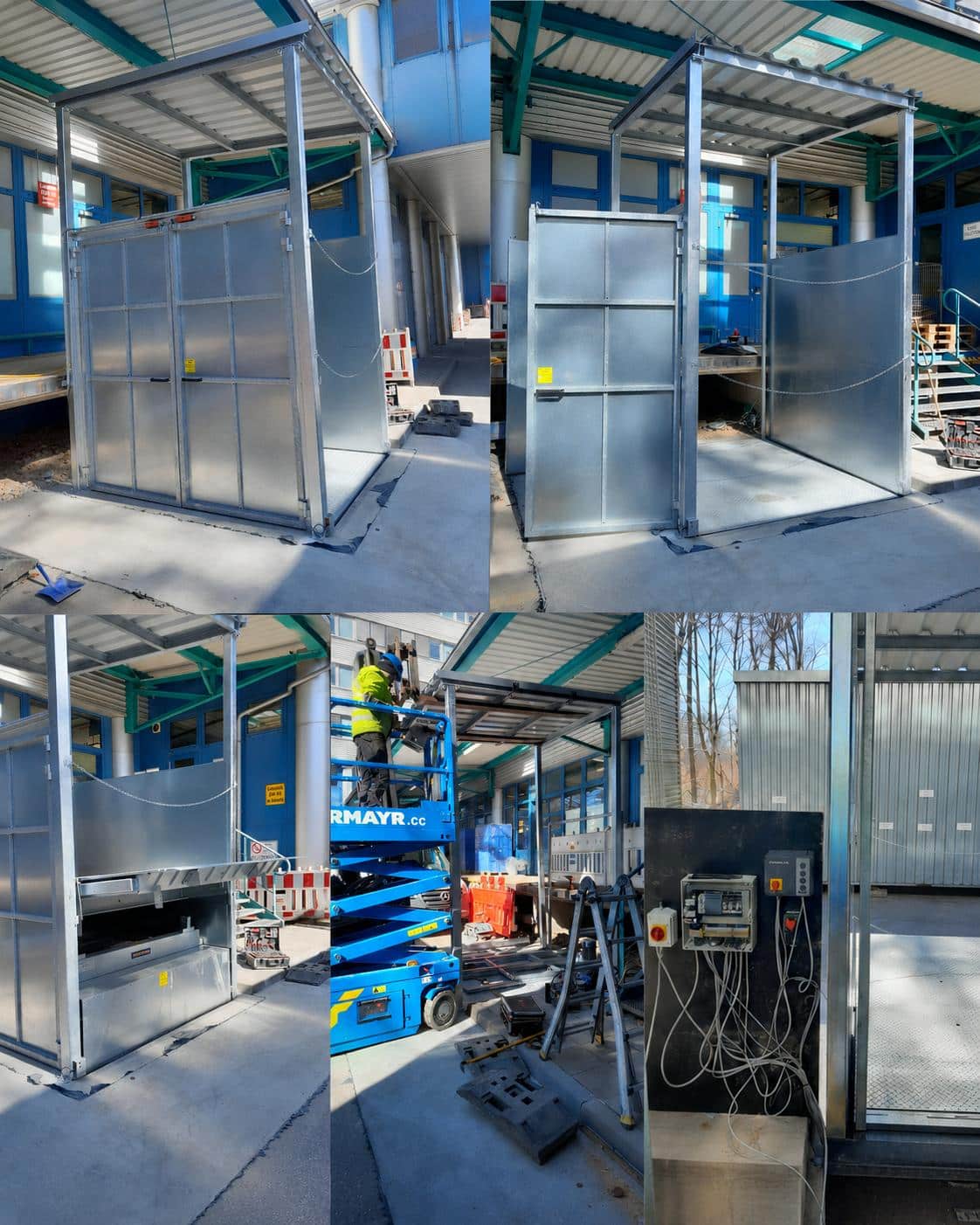
A German industrial company was looking for a loading solution that could handle both trucks and loaded pallet trucks at the same location. The entrances to the depot halls were at standard ramp height, which was ideal for loading and unloading trucks. However, a problem arose when transporting goods from street level into the hall.
Not every loading ramp is safe for a pallet truck. Small wheels, low ground clearance, and steep inclines quickly render traditional ramp solutions unsuitable. Therefore, the loaded pallet truck had to be moved from street level to the level of the depot hall without a long access ramp.
At the same time, the existing loading point was not allowed to lose its original function. Trucks should continue to be able to park directly in front of the ramp and be loaded and unloaded as usual.
Our solution was a galvanized Loading platform with integrated extension ramp and side gate system. The lifting table handles the vertical transport of the pallet trucks. The separately controllable loading ramp connects the building to the truck during loading.
This allows two different goods routes to be handled at a single loading point.
For aftercare, we have concluded a lift table maintenance contract with the customer to maximise the service life of the system and avoid operational downtime.
Optional equipment overview
- Galvanized feed ramp with 1,000 mm feed
- Separately controllable lifting table and ramp extension
- Monitored double-leaf side gate with portal
- Fixed sheet metal protective wall on one long side
- Moving one-sided portal as fall protection
- PVC roller blind as underrun protection on one narrow side
- Trapezoidal sheet metal roof as weather protection
- External wall bracket for the hydraulic unit
- Slip-resistant platform made of tread plate
- Manual pressure control with emergency stop
One loading point for two different freight routes
The loading platform allows the industrial company to transport loaded pallet trucks directly from street level to ramp height. Long and steep ramps are not required.
When a truck is positioned in front of the loading ramp, the pallet jack is used for loading via the monitored side gate. For conventional truck handling, the separately controllable extension ramp is extended and positioned on the loading platform.
The existing loading point thus remains versatile: for ground-level goods flow with pallet trucks, for direct loading and unloading of trucks, and for different vehicle heights in daily operation.
load
4500 kg load capacity
Platform
2500 x 2000 mm
Stroke
Usable stroke 1300 mm
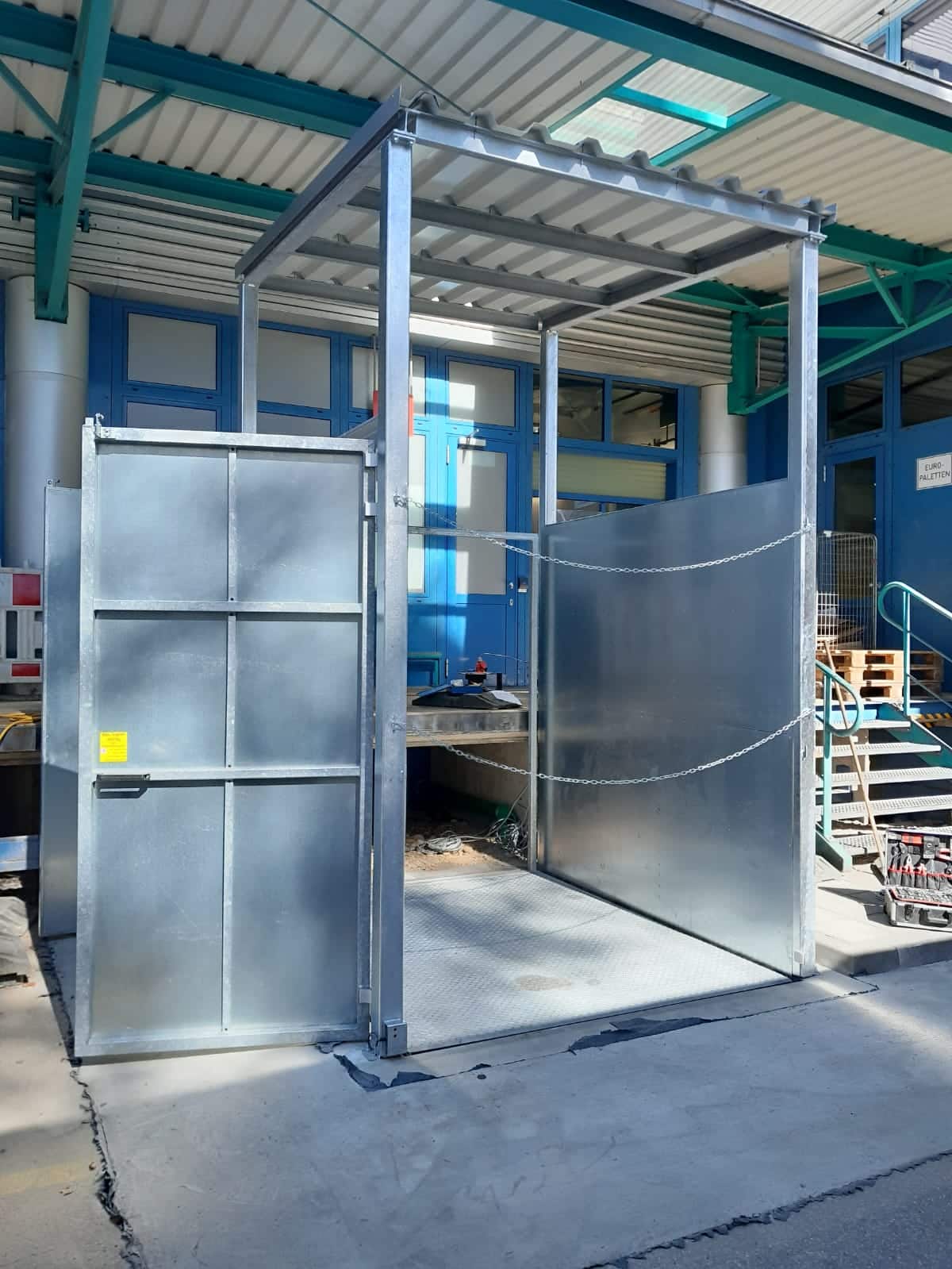
Push the pallet truck onto the loading platform at ground level.
In the lower position, the platform is at street level. This allows the employee to push the loaded pallet truck directly onto the 2,500 × 2,000 mm platform without any incline.
Side access is particularly important if a truck is already parked in front of the loading point. The pallet truck does not need to be moved through the work area in front of the vehicle, but can access the platform from the side.
For this purpose, a double-leaf gate with a portal measuring approximately 2 x 2 meters was integrated into the side protective cladding. The gate's position is monitored. Opening is only possible when the lifting platform is fully in the lower stop.
After the gate closes, the single-scissor lift raises the platform by 1,300 mm to the level of the concrete loading ramp. Once at the top, the pallet truck can be pushed directly from the platform into the depot hall.
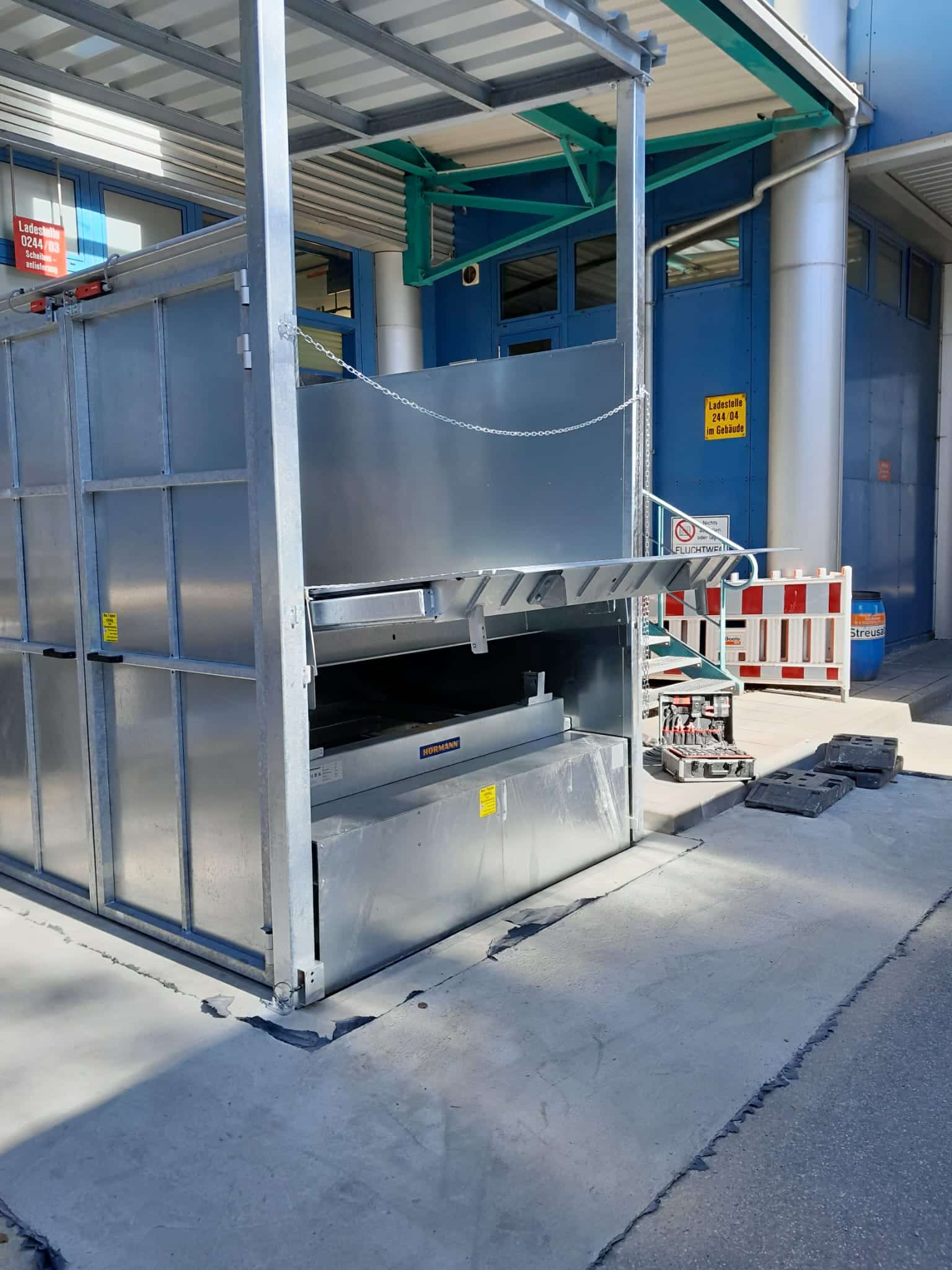
Loading ramp for conventional truck loading
A galvanized extension ramp was also installed on the lifting table. It can be extended by up to 1,000 mm and bridges the gap between the building's loading ramp and the truck's loading platform.
The lifting table and the extension ramp are controlled separately. This allows the platform to first be raised to the required height. The ramp can then be raised, lowered, extended, or retracted independently.
This separation is necessary because the loading platforms of trucks are not always at exactly the same height. The extension ramp can be adjusted to the specific situation and securely positioned on the loading platform.
No additional door was deliberately installed on the side facing the truck. A door would significantly restrict the usable working and swiveling area during loading and unloading. This ensures the facility remains easily accessible for daily truck handling.
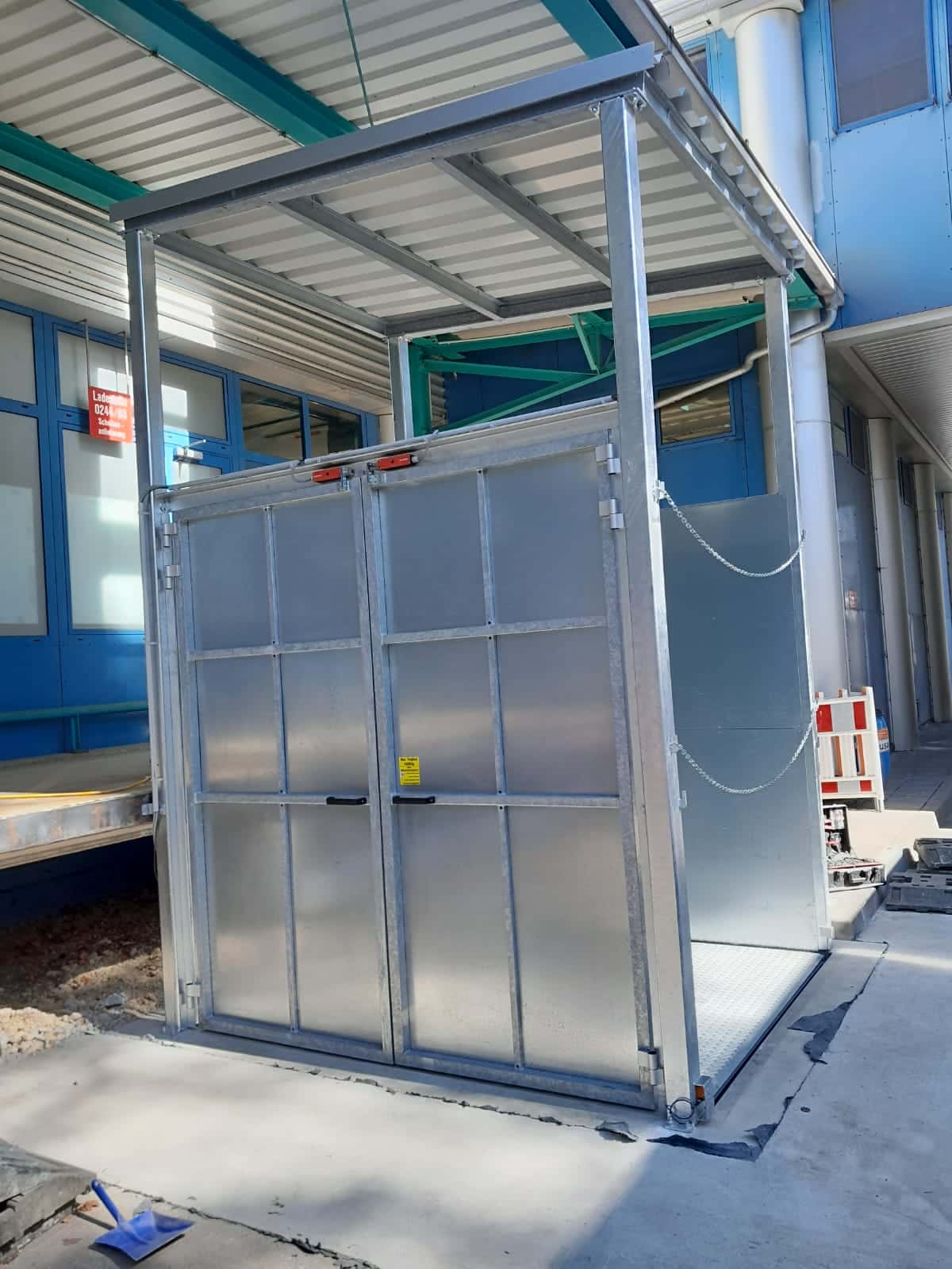
Monitored gate system and enclosure
When designing a loading platform lift, not only the lifting process but also the access to the platform must be considered. In this project, several safety devices were coordinated.
A fixed, fully sheet-metal-clad wall runs along one long side. On the opposite side, a monitored gate system protects lateral access. The gate is only opened at the lower stop.
A moving, one-sided portal serves as fall protection in the area of the upper landing. It moves together with the platform and secures the transition to the raised building ramp when the lifting platform is at its lowest position.
A PVC roller blind was additionally installed on one narrow side as a barrier against falls. It shields the area under the platform and prevents direct access to the scissor mechanism.
The control unit uses push buttons. The desired movement is therefore only executed as long as the corresponding button is pressed. An emergency stop is integrated directly into the control unit.
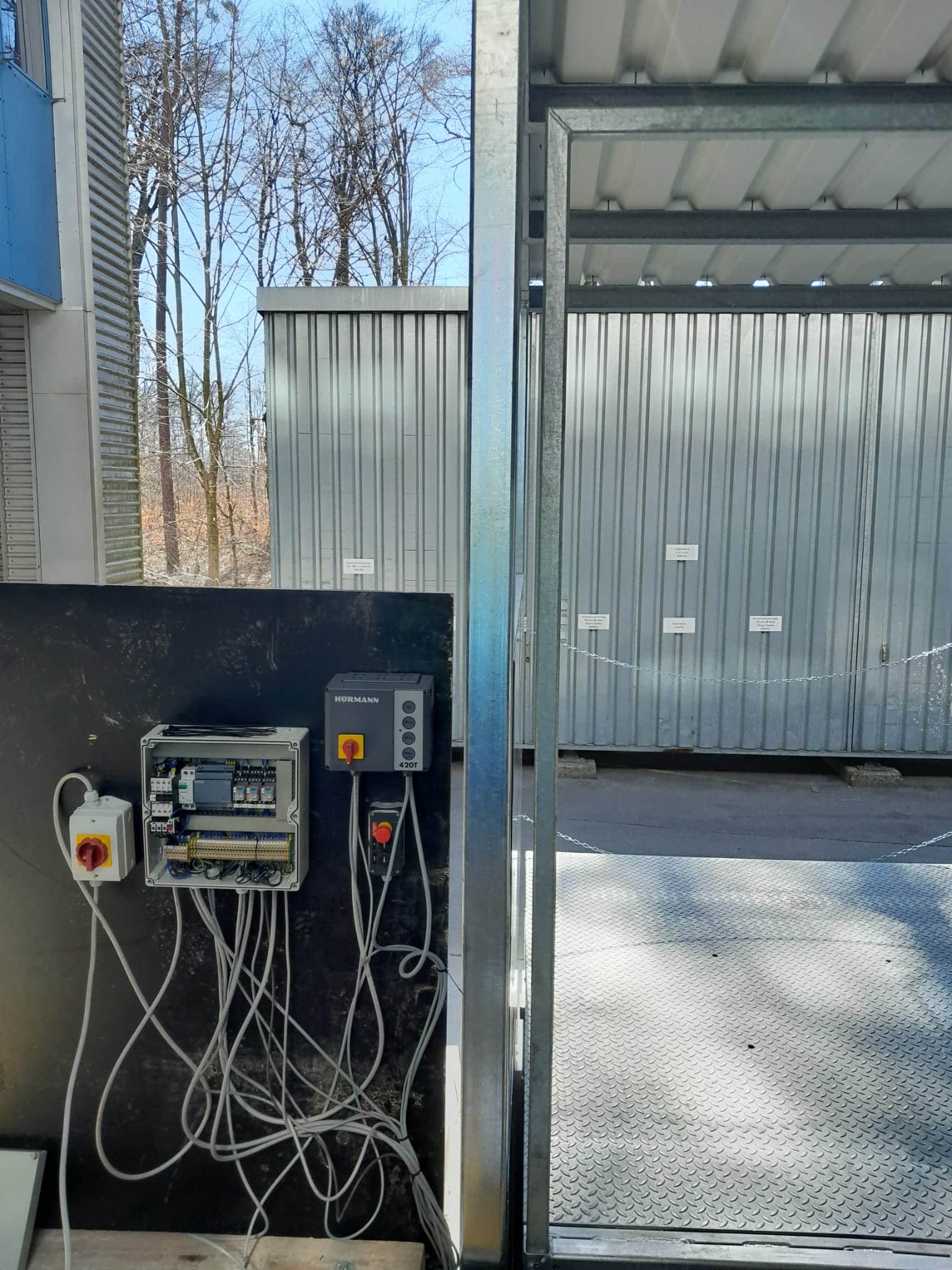
Galvanized version for the loading area
Because the lifting table in the loading area is exposed to moisture, temperature fluctuations, and dirt, the platform, the feed ramp, and the external attachments were galvanized. The scissor mechanism was painted.
As additional weather protection, a trapezoidal sheet metal roof was installed over the system. It protects the immediate work area and some of the technical components from precipitation.
The hydraulic unit was mounted separately on a wall bracket. This keeps it easily accessible and eliminates the need for maintenance in the confined space beneath the platform. The external installation also simplifies hydraulic monitoring and frees up more space within the lifting table structure.
The platform is made of non-slip tread plate and is designed for an evenly distributed load. The lifting process takes approximately 30 seconds.
Order lifting tables now
If you have any questions, please contact us immediately Contact on. We are happy!
FAQ about the lifting table with loading ramp
Frequently asked questions about scissor lift tables with a mounted 1000mm feed ramp
Pallet trucks have small wheels and limited ground clearance. Ramps that are too steep, sharp edges, or large curbs can cause the pallet truck to bottom out, or make it difficult to control a loaded pallet. A loading platform overcomes the height difference vertically. This allows the pallet truck to be pushed onto the platform at ground level.
Yes. In this project, the lifting table handles the vertical transport of the pallet truck from street level to the ramp level. An extendable loading ramp is also available for truck loading. Both functions are controlled separately and can be used depending on the specific flow of goods.
The system is designed for a lifting capacity of 4,500 kg. Since the attached loading ramp and other components are also lifted, an effective payload of approximately 3,800 kg is available for the actual load. This is based on a load evenly distributed across the platform.
The side gate may only be opened when the lifting platform is fully in its lowered position at street level. The gate position is monitored. This prevents the side access from being opened while the platform is raised.
The equipment includes a monitored swing gate, a permanently lined safety wall, a moving portal, a PVC roller shutter as underrun protection, and a manual push-button control with emergency stop. The specific safety features of a loading platform lift must always be adapted to the installation situation, the access points, and the intended operating procedure.