
750–3000 kg · +5° to −40° · EN 1570-1

Lifting and tilting devices: Ergonomic lifting & tilting

With lifting and tilting devices, you can bring pallets, wire mesh containers, and cardboard boxes into the ideal working position – conveniently via a hand-held button. This reduces gripping depths and relieves strain on your back and shoulders.

Height & Angle
Control via hand switch, deadman operation.
Safe & compliant with standards
CE / EN 1570-1, protective frame, anti-slip protection.
Industrial electrical systems
24V control voltage, IP54 system.

One device – two movements: Lifting and tilting devices combine lifting and tilting. The set angle is automatically restored during lifting thanks to the scissor mechanism – this speeds up processes and improves ergonomics.

Wide range

Standard models e.g. 750 kg and 1500 kg – special construction up to 3000 kg.

Flexible working heights

Lifting heights (depending on the version) range from approximately 550 mm to 820 mm.

Very low building height

Versions with a particularly small ground/platform distance for direct loading.

Lifting and tilting device – variant on feet

Lifting and tilting device on feet (portable)

For changing locations: Variants with pallet truck attachment can be implemented using pallet trucks, pallet jacks or forklifts, for example.

  • Ideal for flexible workplaces and production lines.
  • Ergonomic removal/placement thanks to tilt function.
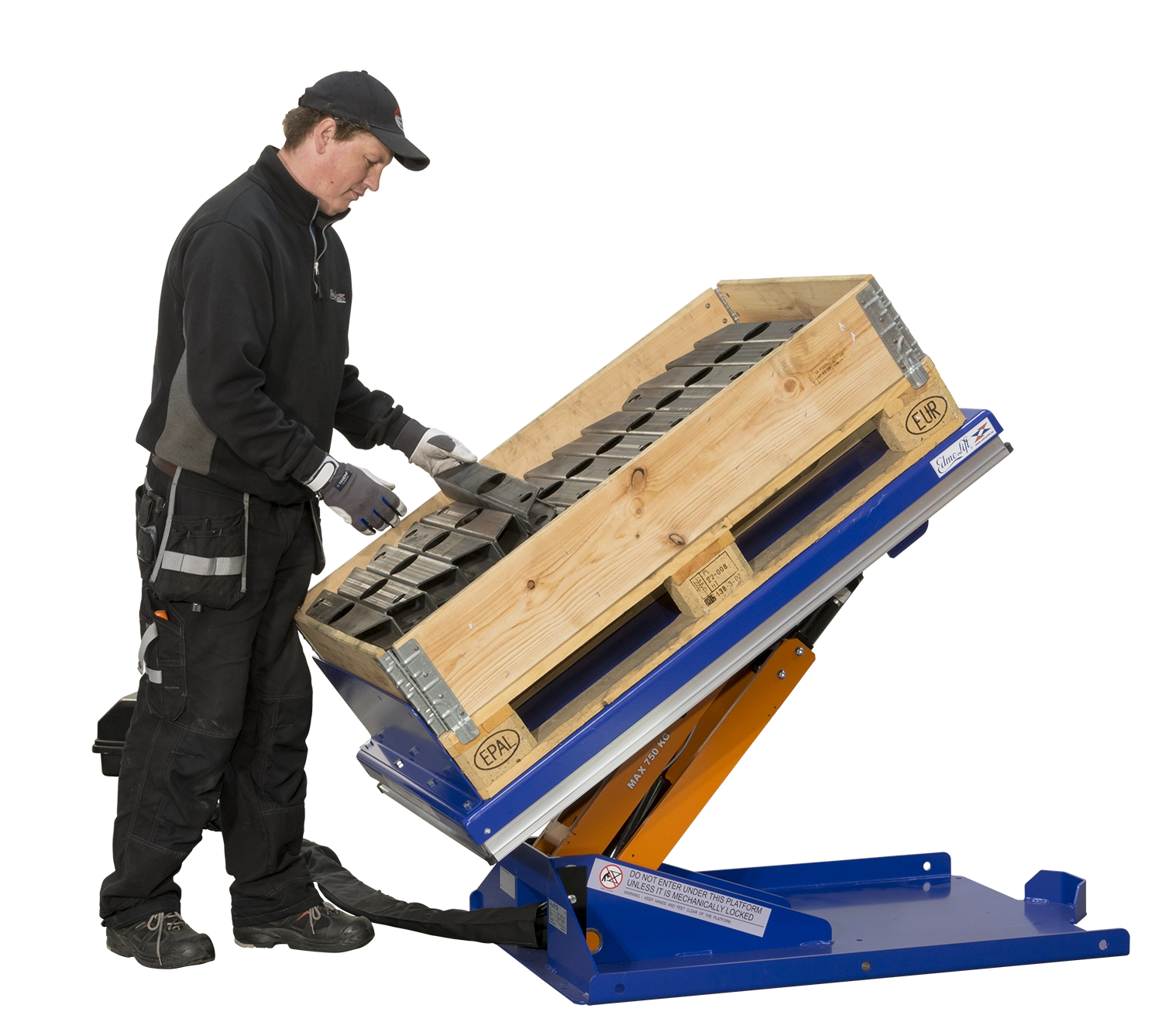
ALT lifting and tilting device with platform

ALT lifting and tilting device with platform

Classic design with closed platform and stop angle on the tilting side – depending on the tilting side, also with 1 or 2 scissor/cylinder arms.

  • Standard dimensions available with short delivery times.
  • Platform size and structures can be customized upon request.
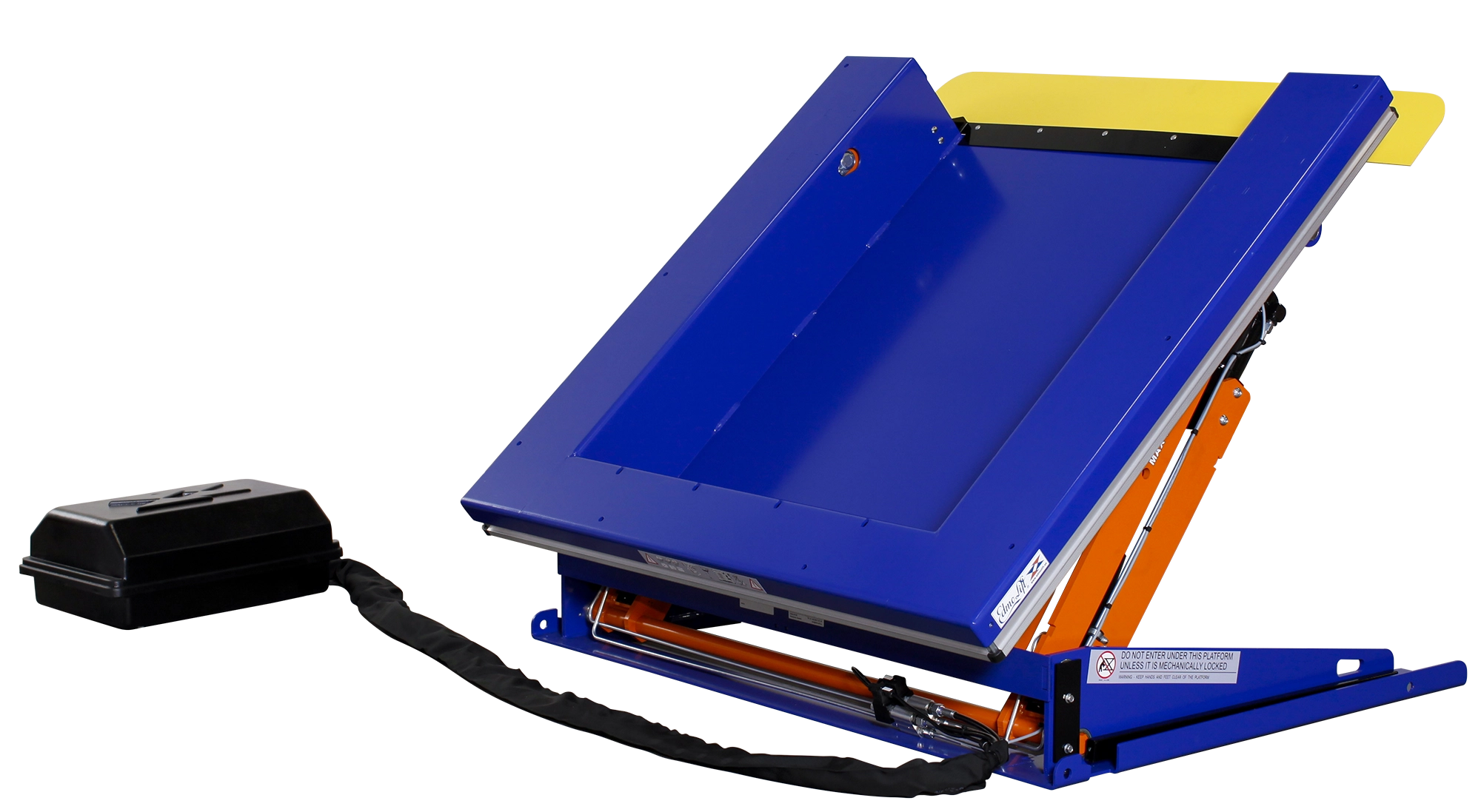
Tilting device with a low overall height

Tilting device with a low overall height

For convenient loading and unloading: Variants with very low overall height and practical mounting for pallets/wire mesh boxes – without complex infrastructure.

  • Easy loading via pallet truck/pedestrian stacker.
  • Goods in an easily accessible position – less bending/stretching.

Technical specifications at a glance

Typical key data (depending on model/variant) – for a specific design, we will tailor dimensions, load capacity and platform shape to your process.

  • Load capacity: up to 1500 kg standard, up to 3000 kg in special construction
  • Lifting heights: Available in lengths from approximately 550 mm to 820 mm.
  • Instructions: Height and angle adjustment via hand switch
  • Inclination: Adjustable between +5° and −40°
  • Security: Anti-slip protection, protective frame, anti-pinch distances
  • Standard/CE: EN 1570-1, CE declaration, multilingual instructions
  • Electrical system: 24 V control voltage in deadman mode, system IP54
  • Maintenance: Maintenance-free bearing (model dependent)

Frequently asked questions about lifting and tilting devices

Important details for planning and selection – from inclination to load-bearing capacity to standards.

What is a lift tilt device and what is it used for?
A lifting and tilting device combines lifting and tilting so that you can ergonomically reach and handle goods from pallets, crates or pallet cages. This reduces gripping depths and is easy on your back and shoulders.
What loads and angles of inclination are usual?
Depending on the model, load capacities often range between approximately 750 and 3000 kg; typical tilt angles reach up to about 45°. There are versions with double-acting hydraulics that can tilt up to 90°.
Is a tilting pallet truck suitable for Euro pallets and pallet cages?
Yes, this is exactly what they are often used for: pallets, pallet cages and containers can be lifted and tilted into a convenient position. This speeds up loading and unloading.
Lift tilt device vs. normal lift table - what's the difference?
A lift table only lifts; a lift and tilt device also lifts and tilts, making it much easier to access the contents. This is particularly useful for crates, frames and deeper pallets.
Does the appliance have to be embedded in the floor?
Not mandatory: Lifting and tilting devices can stand on the floor or be embedded in the foundation. The choice depends on ergonomics, environment and logistics.
Which standards and safety requirements apply?
Standard, high-quality devices bear the CE marking and comply with EN 1570-1 for lifting tables/tilting units. Additionally, the DGUV regulations for lifting and pulling devices must be observed.
Can people be lifted with a lifting and tilting device?
No, passenger transport is not permitted with load handling devices. The DGUV regulations expressly prohibit this.
Are there mobile versions (tilting lift table trolleys)?
Yes, tilting lift table trolleys are mobile versions with parking brakes and usually PU castors; they are suitable for filling/emptying at changing stations. Load capacity and inclination (often up to 45°) depend on the model.
Electric, hydraulic or manual - which is better?
Manual devices are inexpensive and low-maintenance, while electric ones offer convenience and constant lift/tilt speeds at higher utilisation rates. In practice, the cycle and the daily number of cycles are decisive.
How do I choose the right load capacity?
Plan with reserves above the maximum payload and take into account shifts in the centre of gravity due to tipping.
What maintenance is required?
Regularly check the hydraulic oil level, remove air from the system and check the emergency stop/safety edges. Jerky movements often indicate air in the system or incorrect electrical connections.
Are customised products possible?
Yes, many suppliers adjust the lifting height, platform shape (e.g., U-shaped platform), or tilt range and offer accessories such as roller conveyors. This facilitates integration into existing lines.
Where do lift tilt devices offer the greatest ergonomic advantage?
Wherever employees frequently remove or fill containers - assembly, production, packaging, logistics. The aim is to minimise bending/overstretching and thus reduce lost working days.
Are there fixed directions of inclination (upwards/downwards)?
Both are possible: Some systems tilt „upwards“, others „downwards“ for particularly high pallets and stacking frames - the decisive factor is the access angle at the workstation.